Building a Warmer Home with Today’s Most Futuristic Insulation
On a winter morning, there’s a moment before the heating clicks on when you can feel the air’s sharpness. The floor under your feet cools faster than you’d like, and you instinctively reach for a sweater. For centuries, this moment was simply accepted—cold seeped in, heat leaked out, and houses fought a losing battle with the season. People stacked heavy stones for walls, hung thick drapes, and kept fires burning through the night.
The idea of cold isolation—keeping a home’s warmth inside without relying on constant fuel—used to be as much about brute force as clever design. Then, slowly, technology began to shift the equation. The methods to block the cold grew lighter, thinner, and far more precise. Now, materials and systems first developed for space exploration, advanced laboratories, or high-efficiency industrial environments are finding their way into everyday houses.
The future of cold isolation isn’t waiting in a research lab. It’s here, working quietly inside walls, floors, and windows of homes across the world. Many of these technologies sound like science fiction, yet they’re already on the market. The difference between a drafty living room and one that feels naturally warm in sub-zero weather might now come down to a few millimeters of a high-tech barrier you can’t even see.
How Cold Isolation Works Now
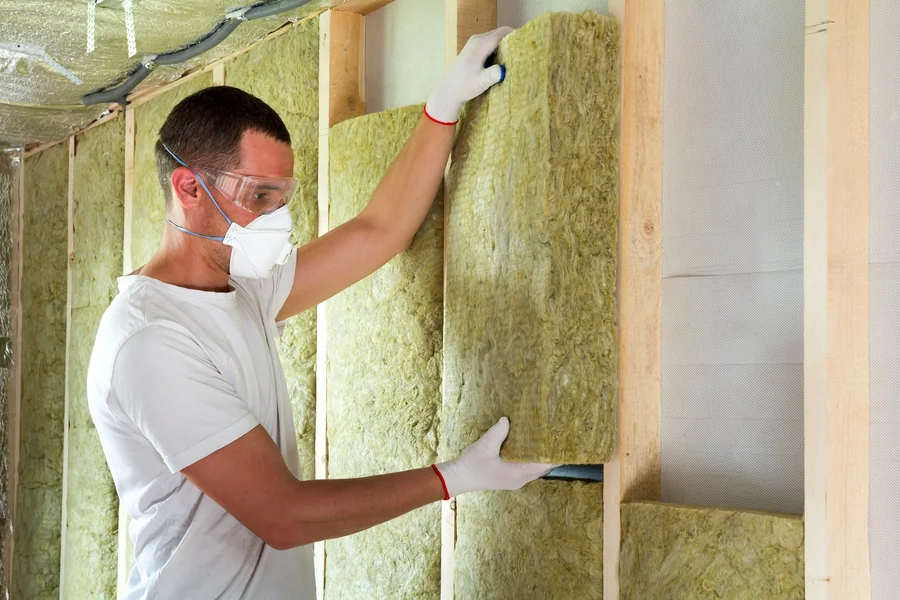
At its core, cold isolation is about controlling heat transfer. Heat moves in three ways: conduction through materials, convection through moving air, and radiation through electromagnetic waves. Traditional insulation slows conduction by trapping air in fibrous or foamed materials. The air pockets reduce direct transfer, but they’re not perfect. Gaps, compression, or moisture can cut their performance sharply.
R-value, the common measure of insulation, describes how well a material resists conductive heat flow. The higher the R-value, the better it keeps heat in. Conventional fiberglass batts might offer R-3 per inch, while more advanced foams push past R-6. The problem is that improving performance often means adding thickness, which can eat into living space or cause structural complications.
New technologies are breaking this trade-off. Instead of relying solely on trapped air, they manipulate matter at micro and nano scales, control how surfaces interact with heat waves, and in some cases actively store and release warmth. A house built with these methods doesn’t just slow the escape of heat—it manages energy flow with the same precision as a thermal system in a spacecraft.
One recent build in northern Europe paired thin vacuum-insulated wall panels with phase change materials in the ceiling and smart-glass windows. Residents reported stable indoor temperatures with minimal heating, even through snowstorms. It’s the kind of performance that hints at how insulation is evolving from passive padding to active environmental control.
Space-Age Material in Your Walls
Aerogel was first made in the 1930s, but it didn’t gain fame until NASA used it for capturing comet dust and insulating Mars rovers. Its ghost-like appearance—translucent, almost like frozen smoke—comes from its structure: more than 99% air trapped in a silica lattice. This makes it the lightest solid material in existence and gives it extraordinary insulating power.
Aerogel panels for homes take this space-age concept and package it into flexible mats or rigid sheets. With R-values exceeding R-10 per inch, aerogel can match or outperform thick layers of conventional insulation in a fraction of the space. It’s especially valuable where thickness is limited: around window frames, in door panels, or in retrofits where walls can’t be rebuilt.
Some manufacturers integrate aerogel into plasterboard or exterior siding, making it easy for builders to install without special handling. In Norway, a row of townhouses completed in 2021 used aerogel blankets in key thermal bridges—the points where heat usually slips out, like corners and roof junctions. The result: the heating system runs at half the expected load.
Cost remains a hurdle, but prices have been falling as production scales up. For homeowners in extreme climates, the performance gain can justify the investment, especially when combined with other high-efficiency systems.
Vacuum Insulated Panels (VIPs)
If aerogel is the lightest solid, vacuum-insulated panels work on the opposite principle: removing air entirely. VIPs enclose a rigid core (often fumed silica) inside a gas-tight envelope, then evacuate the air to create a near-perfect thermal barrier. Without air molecules to carry heat, conduction drops to minimal levels.
A VIP can deliver R-30 to R-50 per inch—an order of magnitude higher than fiberglass—while being only a couple of centimeters thick. That’s why they’re used in high-performance refrigerators and freezers. In housing, they can be fitted into wall assemblies, floors, or roofs where maximum insulation is needed in minimal space.
The main drawback is fragility: puncturing the panel by drilling or cutting breaks the vacuum and destroys its performance. Installation requires careful planning, and replacement can be costly. Even so, VIPs are appearing in high-end sustainable homes, particularly in urban builds where wall thickness affects floor space and market value.
A recent passive-house apartment project in Switzerland used VIPs behind exterior cladding. The result was a slim wall profile that still met stringent insulation targets, freeing up extra interior space in every unit.
Phase Change Materials (PCMs)
While most insulation focuses on slowing heat transfer, phase change materials go further: they store and release heat in response to temperature shifts. PCMs absorb large amounts of energy when they melt from solid to liquid, and release it when they solidify again—without changing temperature during the process.
For cold isolation, PCMs can be tuned to a set point near the desired indoor temperature. For example, a PCM layer in drywall might absorb heat from the sun during the day and release it slowly overnight, reducing the need for active heating.
These materials appear in ceiling tiles, underfloor layers, and wallboards. In Canada, one eco-home integrated PCM panels into south-facing walls. Even during a -15°C cold snap, the living area stayed within two degrees of the target temperature without extra heating.
The key advantage is stability: PCMs smooth out temperature swings, reducing peaks and valleys that cause discomfort and energy waste. They work especially well with passive-solar design and high-performance glazing.
Smart Glass and Transparent Insulation
Windows are often the weak point in cold isolation. Glass conducts heat easily, and even triple glazing can’t match a well-insulated wall. Smart glass changes that equation by adjusting its properties based on light and temperature. Electrochromic layers can darken or lighten to control solar gain, while thermochromic coatings shift reflectivity as the temperature changes.
Transparent insulation materials, such as silica aerogel glazing, allow daylight in while scattering and trapping heat. This means a window can act as both a light source and a thermal barrier. In Germany, several passive-house projects have used aerogel-filled glass units with center-pane R-values above R-12.
The combination of smart glass with transparent insulation allows fine-tuned control: more solar gain on sunny winter mornings, less on hot afternoons, all without mechanical shades or blinds.
Nanotechnology-Enhanced Coatings and Paints
It’s one thing to block heat with bulk materials. It’s another to do it with something as thin as paint. Nanotechnology makes this possible by embedding microscopic ceramic or silica particles into coatings. These particles reflect infrared radiation, reducing radiant heat loss from surfaces.
Applied to walls, roofs, or even window frames, these coatings can improve thermal resistance without changing appearance or requiring structural changes. Some products claim to add the equivalent of several inches of conventional insulation in radiant performance, though they work best as part of a layered system rather than a sole barrier.
A test on a renovated Victorian townhouse in London showed a 15% reduction in heating demand after applying a nanoceramic coating to interior walls. It’s not a replacement for deep insulation, but it’s a simple upgrade for older homes where major retrofits aren’t possible.
Air Sealing with AI and Sensors
Heat loss isn’t just about materials—it’s also about leaks. Even a small gap around a window or in ductwork can undermine the best insulation. Modern air-sealing systems use sensors to detect temperature or pressure differences in real time, identifying exactly where warm air is escaping.
Some systems integrate with home automation, using AI to adjust ventilation rates, control dampers, and even trigger localized sealing mechanisms. This approach allows a house to maintain fresh air while minimizing heat loss—an important balance in well-sealed buildings where air quality could otherwise drop.
In one pilot program in Finland, AI-driven sealing cut heating energy use by 22% in a set of family homes without any changes to the insulation itself.
The Layered Future of Cold Isolation
The most futuristic isolation doesn’t rely on a single technology. Instead, it layers multiple systems to target different heat-loss mechanisms. Aerogel panels might handle thermal bridges, PCMs could stabilize temperatures, and smart glass could fine-tune solar gain, all coordinated by AI sensors.
A custom home in the Rocky Mountains demonstrates this approach: vacuum-insulated panels in the walls, PCM drywall in living spaces, aerogel around windows, and a nanotech roof coating. The owners report heating bills at one-third of their previous home’s, despite harsher weather.
The layering concept mirrors other fields—like restaurant booths combining upholstered comfort, sound absorption, and easy-clean materials for different needs—showing that insulation design can also serve multiple functions at once.
Roof, Floors, and Foundations
Cold isolation is often treated as a wall issue, but roofs, floors, and foundations can leak just as much heat. Underfloor insulation is especially important in raised or unheated spaces. Modern options include high-density foams with nanotech additives, which resist compression and moisture while delivering high R-values.
In colder climates, reflective membranes under roofing help keep heat from escaping upward, especially at night. For basements and foundations, advanced foam-glass gravel and composite panels block cold seepage from the ground while allowing drainage—critical in frost-prone regions.
A net-zero home in Vermont used foam-glass foundation insulation with aerogel sill plates to stop thermal bridging at the base of the walls, cutting basement heat loss by over 40%.
Where This Technology is Going
The biggest challenge for these advanced systems is cost. Aerogel, VIPs, and smart glass still carry price tags that put them in the premium market. But as manufacturing scales and demand rises, prices are dropping. What was once experimental—like PCM-infused wallboards—can now be found in mainstream suppliers’ catalogs.
Future developments may include self-healing insulation that repairs cracks or leaks automatically, bio-based nanomaterials with even higher performance, and AI systems that learn a home’s patterns to optimize thermal performance minute by minute.
Government incentives and building codes are also pushing adoption. Many jurisdictions now require higher R-values or energy performance standards that can’t be met with traditional insulation alone, accelerating the shift to these newer technologies.
The Future You Can Live In Today
Futuristic cold isolation isn’t a distant dream. Aerogel panels, vacuum-sealed walls, phase-change ceilings, smart glass, nanotech coatings, and AI-driven sealing systems are already installed in homes on every continent. They make living spaces warmer, quieter, and more energy-efficient, often without visible signs of their presence.
The choice for homeowners is no longer between comfort and efficiency—they can have both. By adopting even one or two of these technologies, it’s possible to transform how a house feels in winter while reducing energy bills and environmental impact.
In the near future, these systems will likely become standard, integrated into construction as naturally as double glazing or central heating. For now, they offer a glimpse of a home that stays warm not by fighting the cold, but by outsmarting it—using science, engineering, and materials that have already proven themselves beyond Earth.


Post Comment
You must be logged in to post a comment.