Erasing Melasma: Your Guide To Combining Laser And Other Aesthetic Treatments
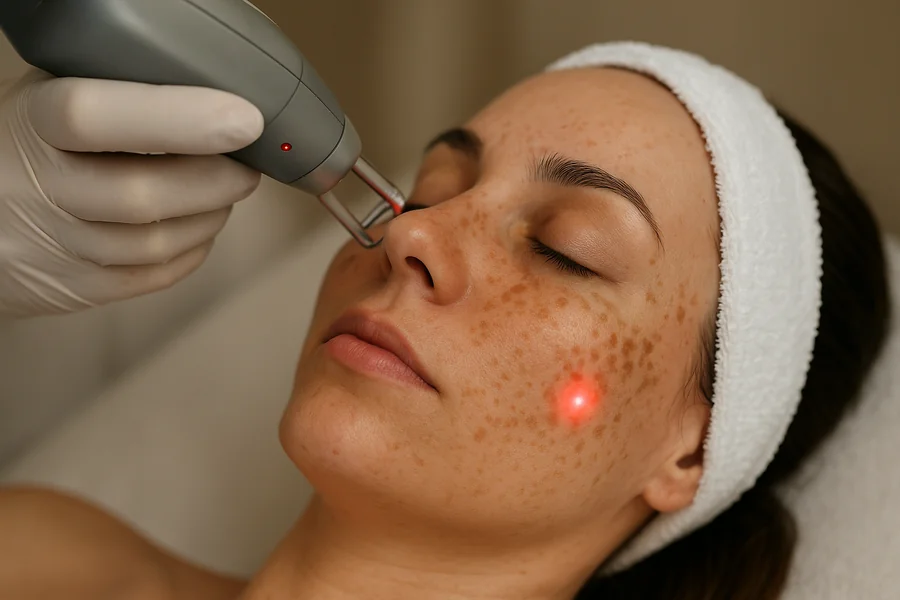
Melasma is a pigmentation condition that usually affects the face and is distinguished by patches of light to dark brown skin, which are blotchy and symmetrical. This pigmentation problem mostly affects women, especially those who are pregnant. Hence, it has been dubbed as the “mask of pregnancy.” Laser is one of the many popular treatments that can be used to treat melasma, but using it as a standalone procedure may not be effective to erase this unsightly blemish on your skin. There are other aesthetic therapies that can be combined with melasma laser treatment to maximise results. Read this article to find out.
Diagnosing Melasma
The correct diagnosis is key for any kind of treatment to produce effective results. Particularly with skin pigmentation conditions as many share common symptoms. A discolouration on your skin may actually be an onset of Melasma, but may be diagnosed as post-inflammatory hyperpigmentation (PIH), which may not need laser treatment as it usually fades over time.
To diagnose melasma, you should first undergo the most important step, which is a clinical evaluation. During a clinical evaluation, your doctor will ask about your medical history, medication use, pregnancy, sun exposure or other triggers that could have caused your skin condition. Your doctor will also do a physical examination on your skin.
There are several procedures that can be used to specifically diagnose melasma. These are:
- Dermoscopy
- Skin Biopsy
- Wood’s Lamp Examination
Dermoscopy is a type of skin imaging that is non-invasive. This procedure helps distinguish melasma from other pigmentation problems by magnifying the skin’s characteristics and clearly exposing the patterns of the pigments. Dermoscopy can bring to light the presence of a net-like pigmentation pattern on your skin, which is a unique characteristic that points to melasma.
Skin Biopsy is rarely used to diagnose melasma, but can be helpful when other procedures have not landed on a specific diagnosis or if your skin problem is unresponsive to given treatments. To do this, a small sample of your skin is harvested and sent to a laboratory to be examined. A skin biopsy can rule out other pigmentation issues like drug-induced pigmentation or lichen planus pigmentous, which are often mistaken for melasma.
Wood’s Lamp Examination is a tool that uses a special kind of ultraviolet light. To do this procedure, your doctor will shine the lamp on the affected area of your skin to see if the pigment lies deep in your skin. Knowing the depth of the pigment is crucial to your treatment since the type of melasma that you have may respond better to topical treatments.
Types of Melasma
Melasma has three types: Epidermal, dermal, and mixed. The difference between these types is basically in how deep the pigmentation is deposited in the skin. Understanding the appearance and characteristic of melasma is important as this influences correct diagnosis as well as treatment response.
Epidermal melasma shows that the pigmentation only affects the outermost layer of the skin or the epidermis. This appears as dark brown patches that are well-defined. When exposed to Wood’s Lamp UV light, the pigmentation on your skin becomes more prominent as it is superficial. Topical treatments work better for epidermal melasma as its symptoms are easily accessible on the skin’s surface.
Dermal melasma, when placed under the Wood’s Lamp, will not show any significant magnification because the pigmentation is deep in the dermis and cannot be reached by the UV light. This type of melasma can be identified by patches of dull brown or bluish-gray skin. Its borders are less defined. Dermal melasma are usually resistant to topical medication and may respond better to laser therapy and longer treatments.
Mixed Melasma is the most common type of melasma. It is a combination of both epidermal and dermal melasma.
Laser Treatment for Melasma
There are many types of laser equipment available to treat a wide array of pigmentation problems, but one particularly stands out for treating melasma: the Q-switched Nd:YAG laser.
The Q-switched Nd:YAG laser uses pulses that are high-peak and ultra-short to select and target pigment granules on your skin while keeping your skin’s pigment producing cells and the surrounding skin intact with minimal damage. In simple terms, the laser’s heat pulses are effective in reducing the appearance of pigmentation without causing too much inflammation in the skin. When done repeatedly, the pigment on the skin reduces, which improves its appearance.
Combining laser with complementing aesthetic procedures
Complementing a laser procedure with other aesthetic treatments for melasma are recommended by many doctors in order to lessen the risk of side effects or relapse and enhance results. Below are some treatments commonly used together with lasers to treat melasma.
- Topical Depigmenting Agents – These are prescription-strength medications that are applied to the pigmented areas of the skin. Examples are Azelaic Acid, Corticosteroids, Hydroquinone, Kojic Acid, Tranexamic Acid, and Tretinoin (Retinoids). When combined with laser treatments usually before and after a procedure, these depigmenting agents can help reduce the production of melanin in your skin and minimise the risk of post-inflammatory hyperpigmentation (PIH).
- Chemical Peels – This procedure uses a chemical solution that exfoliates the skin, resulting in pigmentation reduction and improved texture. Chemical peels can enhance the effectiveness of laser treatments when timed properly as it allows the laser to penetrate better through your skin and remove pigments. The common types of peels used are Glycolic Acid Peels, Jessner’s Peel, Salicylic Acid Peel, and TCA Peel.
- Mesotherapy – This treatment is performed with the use of injecting small amounts of active ingredients into the middle layer of the skin (mesoderm) to target the pigmentation present in this area. The active ingredients used are vitamin C, tranexamic acid, or other brightening agents. Mesotherapy is a great mix to laser when treating melasma as it can improve the laser’s work without adding heat or damage to the skin. It is advisable to undergo this treatment a few weeks after your laser therapy to allow your skin to heal.
- Microneedling – In microneedling, tiny needles are used to prick the skin and create micro-injuries to stimulate the production of collagen. As fresh collagen is produced, the texture and tone of the skin is improved. This procedure can be done alternately with your laser sessions and used to maintain your results and prevent relapse once you are done with your laser treatment.
- Oral Supplements and Medications – Studies have shown aesthetic therapies combined with oral supplements and medications provide better results, specifically when treating melasma cases that are stubborn or recurring. You can take oral supplements like Glutathione, Oral Tranexamic Acid, or Polypodium Leucotomos Extract (PLE).
Conclusion
There is definitely no one-size-fits-all treatment for melasma, but rest assured there would be a combination of therapies that can lighten the burden on your skin. The type of melasma can differ from one person to another, so it is critical that you get a proper diagnosis in order to have the right treatment plan in place. By customising a combination of laser and other aesthetic therapies, your skin receives optimum care and support, which can lead to excellent results.



Post Comment
You must be logged in to post a comment.